
Receipts & expenses
How to Separate Business and Personal Expenses
Practical records. A clearer business.
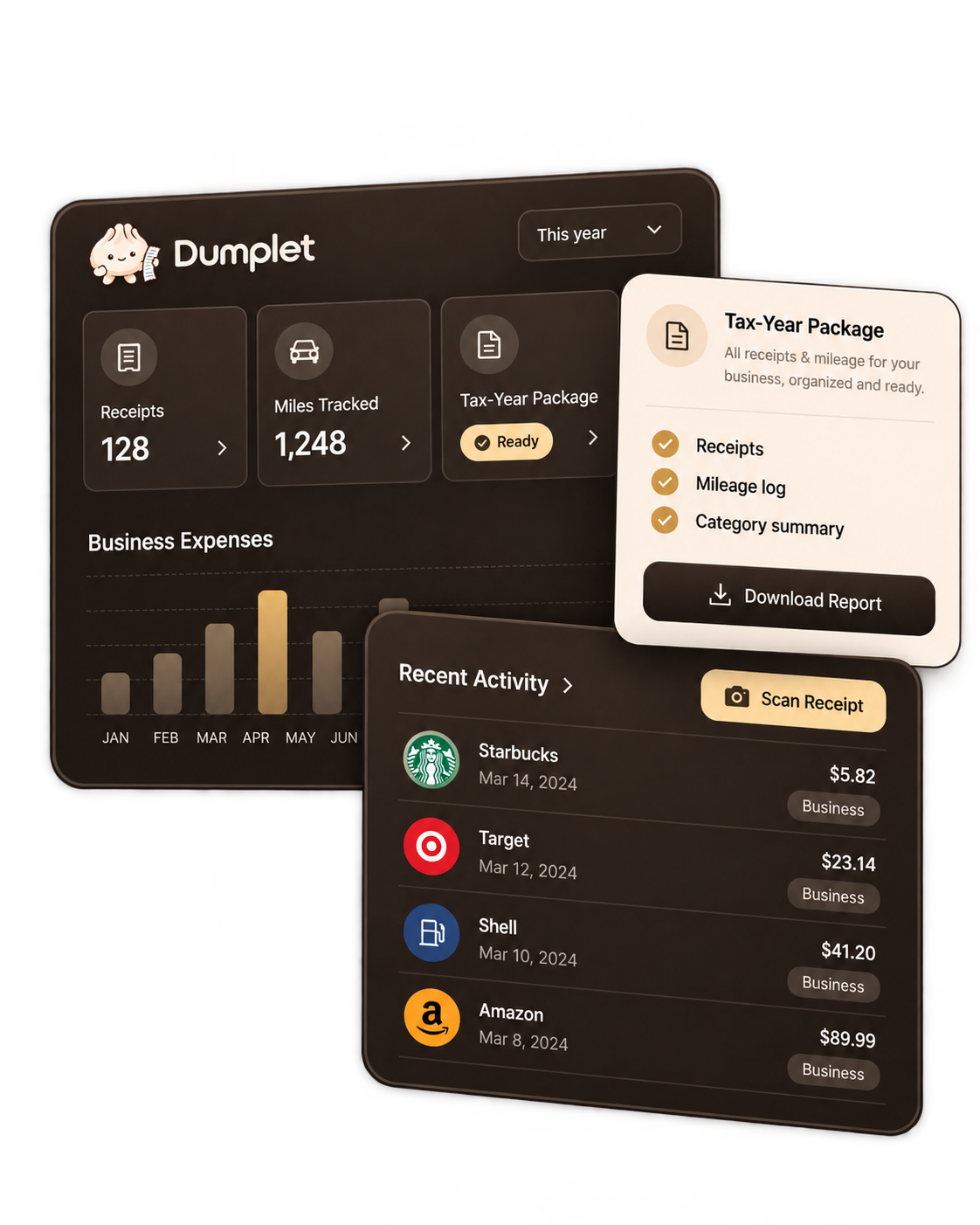
Separating business and personal expenses is easier when it starts with the payment habit, not the year-end cleanup. A clear boundary helps you see what your business costs to run and find the records behind each purchase.
If things are already mixed, you can work through them one transaction at a time. The aim is a clear explanation, not a perfect past.
Give business spending its own route
Use a dedicated business account or card where practical and appropriate for your business structure. Put recurring business subscriptions on that payment method, save the billing receipts, and make it your default for work purchases.
Keep household shopping and other personal spending on personal accounts. Buying everything on one card and sorting it later creates more decisions at review time. A separate card reduces those decisions, though it does not automatically make every transaction on it a business expense.
Your bank, accountant, or adviser can help you choose an account setup suited to your entity and circumstances. Organizing transactions is useful, but it does not replace any legal or accounting requirements that apply to your business.
What to do when you use the wrong card
A business purchase paid from a personal account is still worth documenting. Keep the receipt, identify the business purpose, note how it was paid, and ask your accountant how to record any reimbursement or owner-funded transaction.
A personal purchase paid from the business account should be identified as personal rather than left in business expense totals. Keep an explanation of the correction and any transfer made afterward. Moving money between accounts does not create a second expense or new client income.
For example, if you pay a work software bill personally and later reimburse yourself, retain both records but do not count the bill and reimbursement as two separate operating costs.
Split mixed purchases using the evidence
A single store receipt may include both business supplies and personal groceries. Start with the individual items. Record the business portion separately, retain the full receipt, and add a note explaining which items belong to the business. Account for relevant discounts and taxes consistently rather than choosing an arbitrary percentage.
Shared services can be less straightforward than an itemized shopping trip. Keep a reasonable explanation of the business and personal use, and ask a qualified professional how to allocate it appropriately. Do not assume a shared phone or internet bill is entirely business simply because you sometimes use it for work.
Preserve context without mixing the totals
Separation does not mean throwing away personal records. You may want to keep both sides organized so you understand your overall spending. The key is knowing which view and total you are looking at.
In Dumplet, business records and optional personal expense organization can support those different needs. Check the assignment when capturing or reviewing a document. Keep personal spending out of business expense totals, and make the business purpose clear with categories and notes where appropriate.
If you run more than one business, check that the expense belongs to the correct venture. Keeping businesses distinct matters just as much as separating business from personal purchases.
Use a short monthly review
- Compare recorded business expenses with bank and card statements.
- Flag personal transactions paid by the business and work purchases paid personally.
- Review mixed receipts and the notes explaining their allocation.
- Check that transfers and reimbursements have not been counted twice.
- Attach missing receipts and resolve unclear categories or assignments.
- Keep questions together for your accountant instead of guessing at the treatment.
If you are behind, begin with the most recent month. Once the routine is manageable, work back through older transactions using the same approach.
Make the next purchase easier to organize
Dumplet supports receipt images, screenshots, PDFs, expense categories, and notes, with a Needs You workflow for records requiring attention. Explore receipt tracking for self-employed people and bookkeeping for one-person businesses.
Pair this habit with a simple receipt organization routine. Your business sidekick can hold the records together; a consistent payment habit makes those records easier to understand from the start.
Your business sidekick, from everyday records to a clearer picture.
Explore Dumplet